Higashikawaguchi Public Works Department
Blind Willow, Sleeping WomanThe Shinagawa Public Works Department is the municipal body responsible for the sewers in Shinagawa, and its practical jurisdiction becomes decisive in the recovery of Mizuki Ando’s stolen name tags. When a name-stealing monkey is found hiding beneath the city, the department’s knowledge of and access to the sewer system allow its staff to help capture him. Its role joins civic infrastructure to the story’s unsettling question of how a person’s name can anchor a sense of self.
Nature and authority
The department enters the story through Yoshio Sakaki, its section chief. Sakaki is Tetsuko Sakaki’s husband, and his position gives her a way to bring her suspicions to people who can investigate the city below street level. When Mizuki learns that her two name tags have been recovered, Tetsuko explains that her husband and one of the men under him captured the culprit. Sakaki introduces himself as section chief and identifies his colleague, Sakurada, establishing the chain of responsibility behind the operation.
The department’s authority is specific rather than abstract: it is in charge of the sewers. That ordinary municipal function makes the underground search possible. Tetsuko reasoned that something stealing names and hiding below the city was likely to be in either the subway or the sewers; Sakaki could put that deduction to a practical test by asking his colleagues to investigate the latter.
The sewer operation
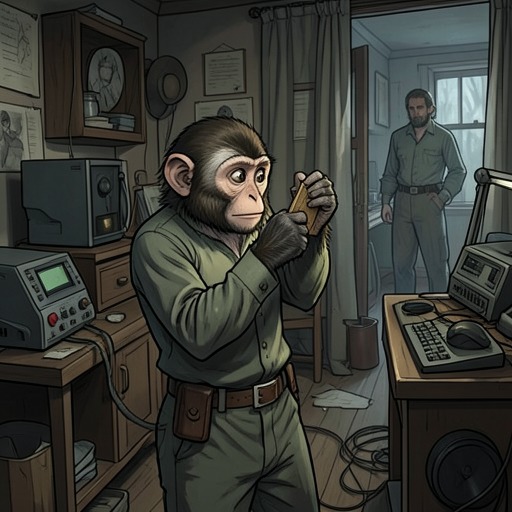
The culprit was a monkey living in Shinagawa’s sewers. Tetsuko asked Sakaki to have his young colleagues catch it, and the request led to the recovery of both name tags. Sakurada, a department worker in his mid-twenties, did most of the capture work. When Mizuki meets the men, Sakurada is present with a black nightstick, a detail that places the encounter in the concrete aftermath of the operation rather than in the realm of speculation.
The monkey had used a hideout underneath Takanawa as a base for foraging across Tokyo. Its explanation links the sewer network to the pressures of life aboveground: it says there are few trees and shady places, that people try to catch monkeys, children throw things or shoot BB guns, dogs chase them, and television crews disturb them in trees. The department’s work therefore uncovers not only the hiding place but also the conditions that drove the animal underground.
Connection to the name mystery
The department’s intervention supplies the physical explanation for the missing tags. Tetsuko tells Mizuki that the tags were stolen and that recovering them would allow her to recover her name. The episode makes the connection tangible: Mizuki’s difficulty recalling her name had become increasingly frequent, while she otherwise retained her memory, including other people’s names and practical personal information. The tags, objects ordinarily used to identify her at work, had been taken from her home; their return connects the disturbance in her self-recognition to a specific act and culprit.
The solution depends on cooperation between different kinds of knowledge. Over two months of listening to Mizuki, Tetsuko gradually inferred that a nonhuman name-thief must be hiding underground. Sakaki then helped turn that inference into an investigation, using his department’s sewer responsibilities to locate the monkey. The department does not explain the mystery by itself: Tetsuko formulates the suspicion, Sakaki mobilizes the staff, and Sakurada carries out much of the work. Together, their actions bring the stolen tags back and make the name-stealing compulsion answerable to Mizuki face-to-face.
Narrative significance
The department’s brief but consequential role gives a municipal institution an unexpected place in a story about names and identity. A public sewer system, normally out of sight, becomes the route by which a hidden creature is found and the missing name tags are recovered. Its work changes the mystery from an inexplicable failure of memory into an encounter with an identifiable thief, while preserving the story’s strangeness: the culprit is a monkey who says he cannot control his urge to steal names.
The contrast is central to the department’s significance. Its procedures are ordinary—an employee asks colleagues to inspect infrastructure within their remit—yet they uncover an extraordinary cause. The city’s underground spaces shelter a creature excluded from life aboveground, and the department’s practical authority makes that hidden life visible. In returning the tags, its workers restore the objects Mizuki associates with her name, while the episode leaves the larger relation between a name and the self open to reflection.